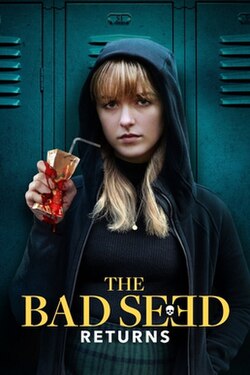
The Bad Seed 2018: Rob Lowe's Remake and the Chilling Father-Daughter Twist
The psychological horror genre often finds its most fertile ground within the confines of domesticity, where the familiar becomes frightening and the innocent turns sinister. Few films embody this more hauntingly than
The Bad Seed, a narrative that has terrified audiences for decades. In 2018, director and star Rob Lowe dared to revisit this classic tale, offering a modern interpretation aptly titled
The Bad Seed 2018. This television film plunges viewers into an intriguing, yet ultimately terrifying world of family dynamics, psychological intrigue, and unsettling horror, all while introducing a pivotal twist that reimagines the core conflict.
Lowe's rendition isn't merely a rehash; it's a carefully crafted remake that retains the chilling essence of the 1956 original while infusing it with contemporary sensibilities and, crucially, a shift in its central relationship. He assembled a compelling cast, most notably including the extraordinarily talented Mckenna Grace, whose performance is central to the film's unsettling power, and Sarah Dugdale, who brings a crucial external perspective to the unfolding drama. For fans of classic horror reboots or psychological thrillers,
The Bad Seed 2018 presents a compelling, if at times unsettling, viewing experience.
A Modern Retelling: Rob Lowe's Vision for The Bad Seed
Rob Lowe, stepping into the dual roles of director and leading actor, took on an ambitious challenge with
The Bad Seed 2018. His directorial debut for a feature film, it sought to update an age-old narrative of inherent evil for a new generation. The most significant and impactful change from the original, however, is the pivot from a mother-daughter dynamic to a father-daughter relationship. Lowe stars as David Grossman, a devoted, if somewhat strained, single father, navigating the complexities of raising his seemingly perfect young daughter, Emma.
This gender swap is not merely cosmetic; it profoundly alters the psychological landscape of the film. Historically, the burden of nurturing and understanding a child, especially a complex female child, has often been placed on mothers in cinema. By casting David as Emma's primary parent, the film subtly explores different facets of parental love, denial, and responsibility. It raises questions about how a father's protective instincts might manifest when confronted with an unthinkable truth, perhaps challenging traditional notions of paternal blindness or the perceived invulnerability of a father-daughter bond.
Mckenna Grace, renowned for her roles in productions like
Young Sheldon, embodies Emma with an unsettling precision. On the surface, Emma is everyone's ideal child: doe-eyed, well-behaved, high-achieving, and exceptionally bright. Yet, as the narrative progresses, David's idyllic world begins to fray at the edges, hinting at a much darker, more dangerous truth beneath his daughter's angelic façade. This initial portrayal of perfection only serves to heighten the horror when her true nature begins to surface.
Emma's Innocence Shattered: Unmasking the Darkness Within
The heart of
The Bad Seed 2018 lies in the gradual, agonizing revelation of Emma's true character. The film masterfully builds suspense as David's perception of his daughter slowly crumbles. What begins as a seemingly innocent misunderstanding on the school playground quickly escalates, morphing into a nightmare that can no longer be ignored or dismissed. This progression cleverly plays on the familiar theme that "not everything is as it seems," a concept that becomes increasingly chilling and inescapable for David.
Emma's seemingly angelic demeanor begins to falter, revealing an ominous undercurrent of something profoundly disturbing. Mckenna Grace delivers a chilling performance, showcasing a surprising maturity and depth for her age. Her ability to switch seamlessly between the warmth and vulnerability of a young child and a disconcerting, calculating menace is what truly anchors the film's unsettling ambiance. To delve deeper into her incredible portrayal, you might be interested in
Mckenna Grace's Chilling Performance in The Bad Seed 2018.
Adding another layer of tension to this engaging narrative is Sarah Dugdale's character, the perceptive schoolteacher who, unlike David, sees through Emma’s polished façade. Her intuition clashes directly with a father's deeply ingrained denial, creating a poignant battle between external suspicion and internal parental bias. This dynamic effectively externalizes the audience's own growing dread, as we watch David grapple with the horrifying implications of the teacher's concerns, unable to reconcile them with the image of his beloved daughter. The film expertly uses these interactions to push David – and the viewer – closer to confronting the unthinkable.
The Father's Agony: Love, Denial, and Moral Dilemmas
At its core,
The Bad Seed 2018 is a profound exploration of parental love pushed to its absolute limits and the moral dilemmas that come with it. As David Grossman, Rob Lowe delivers a nuanced performance, portraying the growing despair and dread of a man slowly uncovering his daughter’s true, horrific nature. His journey from skeptic to terrified believer is the emotional anchor of the plot, forcing him to confront unthinkable questions. How does a parent process the idea that their own child could be capable of unimaginable evil? What lengths would they go to protect them, even from themselves?
The film masterfully taps into universal parental fears: the fear of not truly knowing your child, the fear of their vulnerability, and perhaps most terrifyingly, the fear of their capacity for darkness. David's internal struggle is palpable as he wrestles with the chilling reality that the "monster" he fears could indeed be living under his own roof. This psychological torment is what truly elevates the horror beyond jump scares or gore, embedding it deeply within the realm of existential dread. Rob Lowe’s direction and acting meticulously add these layers of nuance, portraying a father's agonizing descent into a moral abyss. For more insight into his dual role, read
Rob Lowe Directs and Stars in The Bad Seed 2018: Unmasking Emma's Evil.
The film serves as a cautionary tale about the blinding power of love and the human tendency to deny uncomfortable truths, especially when they involve those closest to us. It forces viewers to consider their own boundaries of empathy and forgiveness. Would you protect your child no matter what? Even if they were truly bad? These are the agonizing questions that David must face, and the film doesn't offer easy answers, making for a truly thought-provoking and disturbing viewing experience.
Crafting a Psychological Thriller: Strengths and Nuances of the 2018 Film
As a television movie remake of a classic horror,
The Bad Seed 2018 strives to pay homage to its predecessor while crafting something fresh and watch-worthy for a contemporary audience. In terms of art and craft, the film exhibits a modest level of technical competence. While some critics noted Rob Lowe's debut directorial status led to moments of ambition occasionally hampered by inexperience, and some scenes suffering from a "cardboard-cutout feel," the overall production design and cinematography provide occasional visual flair and atmospheric touches that contribute to the psychological horror. The soundtrack, too, plays a respectable role in enhancing the mood.
One of the film's undeniable strengths, as highlighted previously, is Mckenna Grace's performance. Her talent single-handedly elevates much of the material, making the chilling narrative believable and terrifying. While supporting characters might feel underdeveloped at times, the core dynamic between David and Emma remains compelling enough to drive the story forward.
The execution of suspense, mystery, and horror in this psychological setting is what ultimately makes the film captivating. It delivers a fresh take on the "choose-to-believe" storyline, using the disturbing implication of an evil child as a vessel for engaging the audience. For those who enjoy films that delve into the disturbing underbelly of family life and question the very nature of innocence,
The Bad Seed 2018 offers a unique perspective. It might not be a masterpiece, but it is a serviceable and often unsettling exploration of evil that manifests in the most unexpected of faces.
For enthusiasts of psychological horror, particularly those centered on the fragility of familial bonds, this film provides valuable insight into the genre's enduring appeal. It demonstrates how a simple premise – a child who is not what they seem – can be endlessly reinterpreted to explore deeper anxieties about nature versus nurture, the limits of unconditional love, and the terrifying possibility that evil can reside within the most cherished figures in our lives.
Conclusion
The Bad Seed 2018 stands as a compelling modern reimagining of a classic horror tale, distinguished by Rob Lowe’s dual role as director and star, and its impactful father-daughter twist. While it may deliver a mixed viewing experience in terms of technical execution, its strengths lie firmly in its psychological depth and the chilling performances, particularly from Mckenna Grace. The film masterfully explores themes of inherent evil, the moral quagmire of parental love, and the terrifying journey from denial to devastating acceptance. It provides an engaging and often unsettling look at how far a parent will go when faced with an unthinkable truth, making it a noteworthy addition to the psychological horror canon. For anyone seeking a suspenseful, thought-provoking thriller that taps into primal fears about childhood innocence and the monsters that lurk within,
The Bad Seed 2018 offers a uniquely disturbing experience.